Electric Vehicle Charging Solutions
There is no denying that the EV (electric vehicle) movement has finally gained some real momentum in the past couple of years. Through the first 9 months of 2018 for instance sales of electric vehicles in Canada rose by nearly 160% over the same period in 2017. In fact, during all of 2018, more electric vehicles were sold in Canada than were sold in the previous 3 years combined. Electric car sales now account for more than 8% of all new cars sold in Canada. That’s a trend that is bound to pay handsome environmental dividends down the road. But it also raises the question of just how and where all these new EVs are going to recharge.
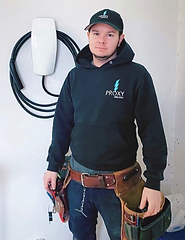
Proxy Technical Corp. is your Partner in EV Power Solutions
Most people are not yet familiar with the charging station, what it is or how it works. It’s in everyone’s interest that we all get to know these important infrastructure items as well as we know the common gas pump. The day is not far off when they will be replacing the gas pump in many areas.
The first thing to know about EV charging stations is that there are 3 different levels of charging. The differences are driven by the available electrical resources at a given location, as well as by the type of vehicles the station is intended to serve. Let’s take a quick look at the 3 levels of EV charging stations.
Level 1 Chargers
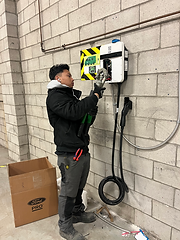
Level 1 electric vehicle chargers are often called ”Maintain" chargers they are typically installed in the home and use a standard 120 Volt AC outlet. The great advantages of the Level 1 station are that it doesn’t require any significant changes to the wiring in your home and, of course, it’s in your home. So you can plug in when you get back from work then go inside and relax. When you come out to go to work in the morning your car will be charged and ready to go. If there is a downside to the level 1 charging station, it’s speed. As in, they’re slow. With Level 1 charging it will take a typical EV 20-30 hours to fully recharge from a depleted battery. The good news, however, is that most people only drive their cars 10 or 20 miles a day. As such they’re not recharging a depleted battery. Instead, they’re topping up their battery. Which can often be done in 8 hours. We’ve installed scores of Level 1 electric chargers in homes all across the GTA and continue to do so on nearly a daily basis. In many ways, it is these homeowners who are leading the way to the EV future by transforming the technology from something mysterious and remote to an everyday part of modern domestic life.
Level 2 Chargers
Level 2 chargers are commonly referred to as “Daily use chargers” since they are most often installed in places such as homes, malls, and office buildings. The Level 2 charger uses a 240 Volt AC outlet, which means it’s considerably faster than the standard 120 Volt. Whereas a Level 1 charger might take 20 – 30 hours to fully charge a depleted battery, a Level 2 charger can charge the same battery in 8 – 12 hours.
You’ll sometimes hear Level 2 charging referred to as “opportunity charging”. It gets that name because people typically take advantage of the opportunity to recharge their EV if they find a Level 2 charging station in a mall or restaurant parking lot. Homeowners will sometimes have Level 2 chargers installed in their homes because they’re so much faster and again, they don’t require any fancy changes to wiring in the house. Also, tax credits may be available to help cover the cost of installing such a charger in your home.
Level 3 Chargers
Level 3 charging is typically referred to as “DC fast charging”. It is by far the fastest, most powerful type of EV charging there is. Level 3 charging is DC charging. It bypasses the onboard AC charging system in electric vehicles and attaches directly to the battery. As a result, an EV can receive a full charge in 45 minutes or less. Tesla built their own network of Level 3 charging stations across North America. But otherwise, Level 3 charging stations are still pretty rare. You’ll typically find them in airports or bus terminals where they are used to recharge electric buses and trucks.
Into the Future
The future of electric vehicles in Ontario and indeed, across all of North America is bright and Proxy Technical Corp. is proud to play some small part in the dawn of this new, more environmentally friendly age.